
MIE Faculty

PhD, P.Eng.
Professor, Industrial Engineering
Email: greg.jamieson@utoronto.ca(opens in new tab)
Tel: 416-946-8504
Office: RM 316, 800 Bay St., Toronto, ON M5S 3A9
Research Group: Cognitive Engineering Laboratory (CEL)
Research Area
Human Factors
Research Interests
Human interaction with automation; analysis of work in complex systems; design of interfaces; cognitive engineering applications in process control; energy systems; other emerging areas.
Bio
Greg A. Jamieson is a Professor in the Department of Mechanical & Industrial Engineering at the University of Toronto. He received a Bachelor of Science degrees in Mechanical Engineering and Psychology (with Distinction) from the University of Illinois at Urbana-Champaign, and the Masters of Applied Science and Doctor of Philosophy degrees in Human Factors Engineering from the University of Toronto. From 2018-2023 he was the Clarice Chalmers Chair of Engineering Design at the University of Toronto. He directs the Cognitive Engineering Laboratory, which conducts applied human factors engineering research in the natural resource and energy industries.
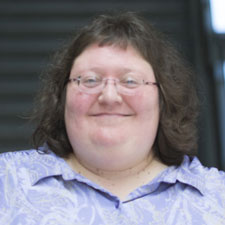
ScD, P.Eng.
Professor, Mechanical Engineering
Email: olivera.kesler@utoronto.ca
Tel: 416-978-3835
Office: MC332
Research Group: Fuel Cell Materials and Manufacturing Lab
Research Area
Materials
Research Interests
Solid oxide fuel cells; fuel cell materials and manufacturing; graded and multi-layered materials; plasma spray and sol gel processing; increasing reliability; durability and decreasing cost of clean energy conversion technologies.
Bio
Olivera Kesler joined the University of Toronto in 2007 and initiated the Fuel Cell Materials and Manufacturing Laboratory, FCMML. The goal of all of the research work in FCMML is to enhance environmental sustainability by developing cleaner energy conversion technologies that reduce air pollution and greenhouse gas emissions compared to combustion-based power generation methods. Research projects are conceived with the goal of tackling the largest challenges preventing the widespread use of fuel cell technologies – cost, durability, and reliability. The ultimate objective of the work is to facilitate the widest and fastest possible adoption of cleaner energy conversion technologies in order to maximize their environmental benefit.
The main focus of the research in FCMML is on solid oxide fuel cell (SOFC) technology. SOFCs are the most efficient known energy conversion device for the production of electricity from a variety of fuels, including renewable biomass, hydrogen, or natural gas, with no smog-forming emissions. However, their use remains severely limited by high costs, as well as by low durability and reliability. Current projects are aimed at drastically lowering the cost and improving the durability of fuel cells through the use of new materials and processing techniques to produce fuel cells more rapidly using a process that is easily scaleable for mass production. Work is also focused on understanding the electrochemical performance and degradation behaviour of SOFCs, in order to develop strategies to increase their durability.
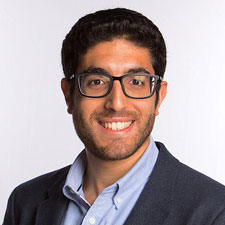
PhD
Associate Professor, Industrial Engineering
SCALE AI Research Chair in Data-Driven Algorithms for Modern Supply Chains
Email: elias.khalil@utoronto.ca
Tel: 416-978-4025
Office: BA8110
Research Areas
Operations Research
Applied Machine Learning
Research Interests
Machine learning, integer programming, algorithm design, learning to optimize, combinatorial machine learning
Bio
Elias Khalil is joining the Department of Mechanical & Industrial Engineering as Assistant Professor starting July 2020. Elias is spending the year as IVADO Postdoctoral Scholar at Polytechnique Montréal. He obtained his PhD in Computational Science and Engineering from Georgia Tech (2019), a MS in Computer Science from Georgia Tech (2014), and a BS in Computer Science from the American University of Beirut (2012). His research interests are in Artificial Intelligence with a focus on machine learning and discrete optimization. He is the recipient of an IBM Ph.D. Fellowship (2016-2017), the First Prize in the poster competition at INFORMS (2017) and the Best Paper Award at the NIPS Workshop on Frontiers of Network Analysis (2013). He has interned at IBM Research and Symantec Research Labs.
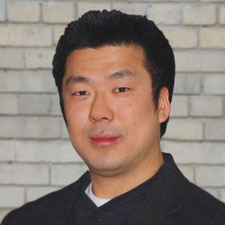
PhD, LEL
Professor, Industrial Engineering
Email: rkwon@mie.utoronto.ca
Tel: 416-978-3274
Office: MC320
Research Group: Financial Optimization and Risk Management (FORM) Laboratory
Research Area
Operations Research
Research Interests
Mathematical optimization and its applications in logistics; supply-chain Management; financial engineering (asset allocation, option pricing); smart material design
Bio
Roy H. Kwon is a professor in the Department of Mechanical & Industrial Engineering at the University of Toronto, St. George Campus. Also, he is a member of the faculty in the Masters of Mathematical Finance (MMF) Program at U of T.
He received his PhD from the University of Pennsylvania in operations research from the Department of Electrical and Systems Engineering in 2002. His research focuses on financial engineering (portfolio optimization, asset allocation, risk management, and option pricing) and supply chain management (logistics and production control).
Dr. Kwon has published articles in such journals as Management Science, Naval Research Logistics, the European Journal of Operational Research, and Operations Research Letters, among others. In addition, he has worked and consulted in the use of operations research (optimization) for the military, financial, and service sectors.
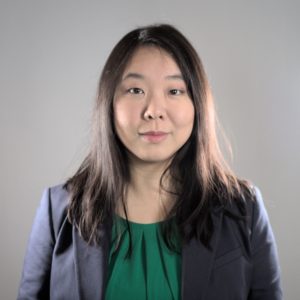
PhD, B.Math, B.B.A
Assistant Professor, Teaching Stream, Industrial Engineering
Email: jy.lam@utoronto.ca
Tel: 416-978-2890
Office: MC306A
Research Areas
Operations Research
Engineering Education
Research Interests
Physical asset management; reliability and maintenance; student motivation and identity; teaching in higher education
Bio
Janet Lam is an Assistant Professor, Teaching Stream in operations research with the Department of Mechanical and Industrial Engineering.
She has been working in the field of maintenance optimization since 2008, with an emphasis on optimal scheduling of inspections for condition-based maintenance.
Janet served as a research associate at the Centre for Maintenance Optimization and Reliability Engineering (C-MORE) applying academic research directly with industry partners, including those in mining, utilities, transportation, and the military. Janet has a track record of cultivating strong relationships with industry partners and developing maintenance engineering resources that are both useful and current.
She is also a respected engineering educator with more than 10 years of teaching undergraduate, graduate, and professional students. She was a Teaching Specialist for first year engineering students at Michigan State University from 2016 to 2017. She is a Fellow of the National Effective Teaching Institute and a Runner-Up Best Upper Year Instructor in the Skule Student Choice awards 2020-2021.
Janet received her Ph.D. in Industrial Engineering at the University of Toronto, her B.Math in Operations Research at the University of Waterloo and her B.B.A. from Wilfrid Laurier University.
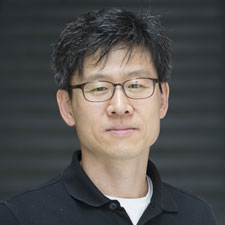
PhD, P.Eng.
Professor, Industrial Engineering
Email: chiguhn.lee@utoronto.ca
Tel: 416-946-7867
Office: MC322
Research Group: Dynamic Optimization & Reinforcement Learning Lab (DORL)
Research Areas
Operations Research
Applied Machine Learning
Research Interests
Various logistics problems; sequential decision making theories; financial theories applied in manufacturing and service sectors; market-driven conflict resolution; optimal pricing; marketing; information system control and design.
Bio
Chi-Guhn Lee is a professor in the Department of Mechanical and Industrial Engineering at the University of Toronto. He received his Ph.D. in the area of Industrial & Operations Engineering from the University of Michigan, Ann Arbor, and joined the University of Toronto faculty in 2001. Prior to his Ph.D. studies, he spent over three years at Samsung SDS in Seoul, Korea, leading a project of re-usable OOP library for fast prototyping of system integration software. Professor Lee has done both theoretical and applied research in dynamic optimization under uncertainty. His theoretical works involve accelerated value iteration algorithm for Markov decision processes, progressive basis-function approximation for value function space, multi-variate Bayesian control chart optimization, and optimal learning using Multi-armed Bandit Model. His interest in application is diverse from supply chain optimization to financial engineering, to dynamic pricing and to healthcare optimization. In the past years, he and his team have actively adopted machine learning algorithms into their research portfolio. In particular, he is currently active in reinforcement learning, inverse reinforcement learning, and deep reinforcement learning.
Professor Lee holds positions as associate editor – Enterprise Information System and International Journal of Industrial Engineering – and serves as a member in a few editorial boards.
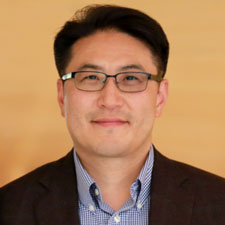
PhD
Professor, Mechanical Engineering
Email: patrickc.lee@utoronto.ca
Tel: 416-946-5407
Office: MC311
Research Group: Multifunctional Composites Manufacturing Laboratory (MCML)
Research Areas
Materials
Thermofluids
Research Interests
Micro-/nano-structuring; Bio-inspired hierarchical hybrid composites; Recycling battery waste polymers; Bio-inspired nano-structuring of laser-induced graphene (LIG); Carbon foam/aerogel from biosources; Bio-based nanofibril-reinforced composites and foams; In-situ visualization under static and dynamic conditions; Crystallization study with Fast Scanning Calorimeter (FSC); Thermoresponsive composites for biomedical applications; Predictive foam modeling using machine learning; High-pressure reverse osmosis membranes; Microcellular foam; Nanocellular foam; Crystallization under gas/supercritical fluids; Foaming fundamentals; Computational modelling of foaming; Micro-/nano-fibrillar manufacturing; Process–structure relations of foams; Structure–property relations of foams; Battery materials and electrodes (including niobium-based systems); Polymer-based components for energy storage; Structure–property relationships in battery materials.
Bio
Patrick Lee is a Professor in the Department of Mechanical and Industrial Engineering at the University of Toronto. He earned his B.Sc. in Mechanical Engineering from the University of British Columbia, followed by an M.A.Sc. and Ph.D. in Mechanical Engineering from the University of Toronto in 2001 and 2006, respectively. He then completed postdoctoral research in the Department of Chemical Engineering and Materials Science at the University of Minnesota.
In 2008, Professor Lee began his professional career at The Dow Chemical Company as a Research Scientist and Project Leader within their R&D organization. In 2014, he joined the Department of Mechanical Engineering at the University of Vermont as an Assistant Professor, where he established an independent research program focused on lightweight and smart composite structures. He returned to the University of Toronto in July 2018 to join the Department of Mechanical and Industrial Engineering.
Professor Lee’s research specializes in polymer processing and characterization, with a particular focus on processing–structure–property relationships in hybrid nanocomposites and polymer foams. He has published 128 journal papers, over 160 refereed conference abstracts/papers, six book chapters, and holds 32 filed or issued patent applications. He serves as Principal Investigator or Co-Investigator on numerous nationally and internationally funded research projects supported by government agencies and industry partners.
His contributions have been recognized through several prestigious honors, including his election as a Fellow of the Canadian Society for Mechanical Engineering (CSME) in 2024. He is also the recipient of the G.H. Duggan Medal from CSME (2020), the AKCSE Early Achievement Award (2019), the NSF CAREER Award (2018), the PPS Morand Lambla Award (2018), the Hanwha Advanced Materials Non-Tenured Faculty Award (2017), and three Best Paper Awards from the Society of Plastics Engineers (2005, two in 2011).
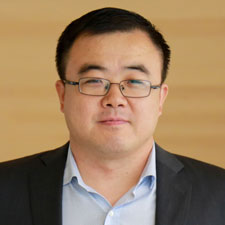
PhD, P.Eng., FEIC, MEASA, FCSME, FASME
Professor, Mechanical Engineering
Percy Edward Hart Professor of Mechanical & Industrial Engineering
Email: xinyu.liu@utoronto.ca
Tel: 416-946-0558
Office: MC312
Research Group: Microfluidics and BioMEMS Lab
Research Areas
Robotics
Thermofluids
Research Interests
Microfluidics and lab-on-a-chip technologies; biosensors; bio-microelectromechanical systems (bioMEMS); point-of-care diagnostics; robotics and automation at the micro and nanoscales; soft robotics; flexible/stretchable sensors and electronics
Bio
Xinyu Liu is a Professor in the Department of Mechanical and Industrial Engineering. Prior to joining the University of Toronto, he was an Associate Professor and the Canada Research Chair in Microfluidics and BioMEMS in the Department of Mechanical Engineering at McGill University. He obtained his B.Eng. and M.Eng. from Harbin Institute of Technology in 2002 and 2004, respectively, and his Ph.D. from the University of Toronto in 2009, all in Mechanical Engineering. He then completed an NSERC Postdoctoral Fellowship in the Department of Chemistry and Chemical Biology at Harvard University in 2009–2011.
Prof. Liu’s research interests are at the interfaces of microfluidics and robotics. His research group is developing integrated micro/nano devices and systems to target a variety of exciting applications in biology, medicine, and environment. Applications of their recent technologies include point-of-care diagnostics, environmental monitoring, large-scale gene editing, and wearable and implantable sensing, and robotic rehabilitation.
His achievements have been recognized through several awards and honours, including: the elected Member of the European Academy of Sciences and Arts (EASA); Fellow of the Engineering Institute of Canada (EIC Fellow), the American Society of Mechanical Engineers (ASME Fellow), and the Canadian Society for Mechanical Engineering (CSME Fellow); Canada Research Chair in Microfluidics and BioMEMS; the Douglas R. Colton Medal for Research Excellence; the Percy Edward Hart Professorship from the University of Toronto; the Christophe Pierre Award for Research Excellence from McGill University; and the Star in Global Health Award from Grand Challenge Canada. His publications have also been recognized by the Outstanding Article Award from Materials Horizons (IF: 15.7), the Highly Cited Article Award from Microsystems & Nanoengineering (IF: 8.0), and eight Best Paper Awards at major engineering (IEEE & ASME) and biomedical (ASRM & CFAS) conferences.
Prof. Liu serves as the Corresponding Chair of the IEEE Robotics & Automation Society (IEEE-RAS) Technical Committee of Micro/Nano Robotics and Automation, and the Chair of IEEE-RAS Technical Committee Cluster on Health and Medical Robotics. He was a General Co-Chair of the International Conference on Manipulation, Automation and Robotics at Small Scales (MARSS 2022), the Awards Chair of MARSS 2017, and the Program Co-Chair of the 2018 IEEE International Conference on Real-Time Computing and Robotics. He has also served on the organizing/program committees of another 12 international conferences in IEEE and ASME. As a Senior Editor of IEEE Robotics & Automation Letters and Microsystems & Nanoengineering, he plays a key role on the senior editorial teams of the two influential journals. In 2021, he was appointed Specialty Chief Editor by Frontiers in Robotics and AI and initiated the new section of Nano and Microrobotics in the journal.
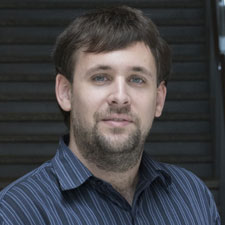
PhD
Professor, Teaching Stream, Mechanical Engineering
Associate Chair, Undergraduate Curriculum
Wallace Chalmers Chair in Engineering Design
Email: matthew.mackay@utoronto.ca
Tel: 416-978-5746
Office: MC310
Research and Teaching Interests
Embedded Systems, Mechatronics (especially Analog/Digital System Architecture, PCB Design and Layout, and Electronic Product Design), Drones and UAVs, Robotics and Automation, Mechanical Design and CAD, and Electric Vehicles.
Biosketch
Matthew Mackay is a Professor, Teaching Stream in the Department of Mechanical & Industrial Engineering at the University of Toronto, specializing in teaching mechatronics, robotics, mechanical design, electronics, programming, embedded systems. Professor Mackay completed his Ph.D. in 2011 at the University of Toronto, and was hired with the department in the same year, progressing from Lecturer to Senior Lecturer (title replaced by Associate Professor) in 2015.
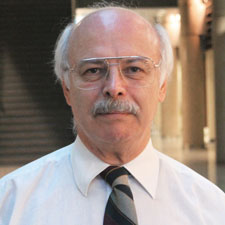
PhD, LEL, FRSC, FCAE, FAAAS, FASME, FAPS, FSPIE
Professor, Mechanical Engineering
Canada Research Chair (Tier 1) in Diffusion-Wave Sciences and Technologies
Director, CADIFT
Email: andreas.mandelis@utoronto.ca
Tel: 416-978-5106
Office: MC334
Research Group: Center for Advanced Diffusion-Wave and Photoacoustic Technologies (CADIPT)
Research Area
Thermofluids
Materials
Research Interests
Thermal and optoelectronic non-destructive techniques (thermophysics and photovoltaics); biothermophotonic and biophotoacoustic imaging science and instrumentation; cancer, dental caries, bone and blood glucose diagnostics.
Bio
Professor Andreas Mandelis is a Full Professor of Mechanical & Industrial Engineering; Electrical & Computer Engineering; and the Institute of Biomaterials & Biomedical Engineering, University of Toronto. Dr. Mandelis’ fundamental research interests are focused on studies of physical processes in condensed and biological matter as they impact instrumentation science and signal generation. Examples are thermophysics, non-radiative and radiative physics of electronic, optical and biomedical materials, photoacoustic, photothermal and diffusion-wave phenomena in manufactured, electronic, biological and photonic media. Current interests include building theoretical and experimental system foundations of biothermophotonic and biophotoacoustic transport phenomena and frequency-domain instrumentation for imaging in hard (dental, bone) and soft tissues, novel biosensors and high-performance diagnostic imaging techniques. Culminating in his work on the foundations of the field of photoacoustic and diffusion waves in matter, his applied research interests span all aspects of instrumentation and measurement development for photoacoustic, photothermal, and diffusion-wave high-precision, high-dynamic-range analytical techniques leading to advanced non-destructive (non-invasive) inspection and monitoring technologies. Current application examples are in the fields of alternative energy conversion devices (e.g. solar cells, nano-optoelectronic devices), industrial manufactured products (steels, metal composites) and biomedical and dental diagnostics with major focus on advanced dynamic imaging instrumentation.
Professor Mandelis is the Canada Research Chair (Tier 1) in Diffusion-Wave Sciences and Technologies and a Fellow in the Academy of Sciences of The Royal Society of Canada. He has been selected for the Alexander von Humboldt Professor Award twice (in 2003 and 2012). He is the 2007 (inaugural) recipient of the Ontario Premier’s Discovery Award in Science and Engineering. He received the ASME 2009 Yeram Touloukian Award (and Medal) in Thermophysics, the Senior Prize of the International Photoacoustic and Photothermal Association, and the Canadian Association of Physicists (CAP) Medal for Outstanding Achievement in Industrial and Applied Physics. In 2010 he was awarded a Killam Research Fellowship from the Canada Council for the Arts. He is the recipient of the American Physical Society’s (APS) 2012 Joseph F. Keithley Award for Advances in Measurement Science and of the CAP-INO Medal for Outstanding Achievement in Applied Photonics. In 2013 he was selected as one of 10 recipients of the 2013 University of Toronto Inventors of the Year Award. He is a Fellow of the Canadian Academy of Engineering, the APS, the SPIE, the AAAS and the ASME. In 2024, Professor Mandelis was selected as a Highly Ranked Scholars™ by ScholarsGPS, which celebrates exceptional performance in various Fields, Disciplines, and Specialties.