
MIE Faculty
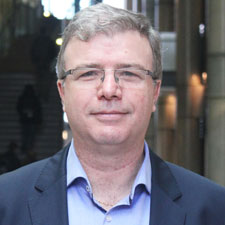
PhD, P.Eng., FCSME
Professor, Mechanical Engineering
Chief Research Officer and Associate Academic Director of Mitacs
Email: rbenmrad@mie.utoronto.ca
Tel: 416-946-0689
Office: MC224
Research Group: Mechatronics and Microsystems Design (MMDL)
Research Area
Robotics
Research Interests
Mechatronics; precision design; smart materials; piezoceramics; thin film piezoelectrics; nonlinear and real-time control; microelectromechanical systems (MEMS) and microfluidics.
Bio
R. Ben Mrad, P.Eng., FCSME, is a Professor in the Department of Mechanical & Industrial Engineering, University of Toronto. He joined the University in 1997, having previously held research positions at the National Research Council of Canada in Vancouver, BC, and the Ford Research Laboratory in Dearborn, Michigan. He received a PhD in Mechanical Engineering from the University of Michigan, Ann Arbor in 1994.
Professor Ben Mrad’s research interests are Mechatronics and Micro Electro Mechanical Systems (MEMS) with a special focus on the design of pieozceramic actuators and sensors, microactuators and microfluidic systems, MEMS fabrication, thin film pieozoelectrics and development of smart materials based devices. His research led to a number of patents and inventions including 9 US patents/patent applications. He has supervised the research of over 55 graduate students and researchers, received the Faculty Early Career Teaching Award in 2002, and the Connaught Innovation Award in 2013 and 2015.
He serves on the NSERC Mechanical Engineering Grants Committee (2008-2011), chairs the IEEE Industrial Electronics Committee on MEMS and Nanotechnology, and serves on the Executive Board of the CanSmart Group. He is currently a Technical Editor of the IEEE/ASME Transactions on Mechatronics, Editor of IE Tech News, and serves on the Steering Committee of the IEEE/ASME JMEMS. He was also a Guest Editor of the IEEE Transactions on Industrial Electronics. He also served as a founding Director of the Institute for Robotics and Mechatronics at the University of Toronto (2009-11).
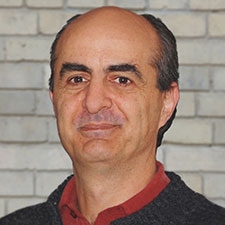
PhD, P.Eng.
Professor, Mechanical Engineering
Email: beno.benhabib@utoronto.ca
Tel: 416-978-3447
Office: MC417
Research Group: Manufacturing Instrumentation & Virtual Manufacturing (MIVM) Laboratory
Computer Integrated Manufacturing Laboratory (CIMLab)
Research Area
Robotics
Research Interests
Design and mathematical analysis of modular and multi-arm robots; machine vision; robotic sensors; supervisory control of manufacturing systems; automatic quality control; computer aided design.
Bio
Beno Benhabib, P.Eng., joined the Department of Mechanical Engineering at the University of Toronto in 1986, and is currently a Professor in the Department of Mechanical & Industrial Engineering and in the Institute of Biomaterials & Biomedical Engineering. His research interests are in the area of design and control of intelligent autonomous systems. He is also a member of the NSERC Canadian Network for Research and Innovation in Machining Technology. His research in the past 25 years was supported by over 100 Masters and Doctoral Students, as well as a large number Postdoctoral Fellows and Research Engineers, with an overall funding level of almost $4M. Their combined effort has resulted in over 325 international journal and conference publications, as well as several book chapters. He is also the author of the book Manufacturing: Design, Production, Automation, and Integration.
Professor Benhabib serves as the Editor-at-Large, Americas, for the Journal of Intelligent and Robotic Systems, and as the Associate Editor for the Journal of Quality and Standards. He is also a member in the Canadian Council for Theory of Machines and Mechanisms, as well as in the Mechatronics Technical Committee, the International Federation of the Theory of Machines and Mechanisms.

PhD, P.Eng. FEC
Professor, Mechanical Engineering
Canada Research Chair (Tier 2) – Engineering for Sustainable Global Development
Director of the Center for Global Engineering (CGEN)
Email: amy.bilton@utoronto.ca
Tel: 416-946-0622
Office: MY794
Research Group: Water and Energy Research Laboratory (WERL)
Research Area
Thermofluids, Mechanics & Design
Research Interests
Energy systems; water purification and desalination; design for the developing world; computer-aided design methods; design optimization under uncertainty; control system design.
Bio
Amy Bilton is a Professor in Mechanical Engineering and the Director of the cross-disciplinary Centre for Global Engineering (CGEN) at the University of Toronto. Her research group, the Water and Energy Research Lab (WERL), focuses on developing innovative water and energy technologies, many aimed at improving the lives of vulnerable people around the world. She has collaborated with industry and NGOs across the globe, with notable projects in India, Bangladesh, Vietnam, Mexico, and Nicaragua.
Professor Bilton holds a PhD and MS in Aeronautics and Astronautics from MIT, as well as a BASc in Engineering Science (Aerospace) from the University of Toronto. Her work has been published in prestigious journals, including Science Advances, Nature Sustainability, Environmental Science and Technology, and World Development. She is a Canada Research Chair in Engineering for Sustainable Global Development and has received numerous accolades for her contributions, including the Engineers Canada Young Engineer Achievement Award.
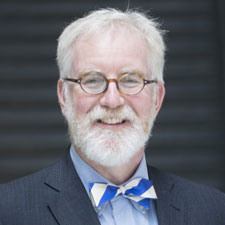
PhD, P.Eng., FCSME
Professor & Chair, Mechanical Engineering
Email: markus.bussmann@utoronto.ca
Tel: 416-978-7198
Office: MC136
Research Group: Modeling Materials Processing Laboratory
Website: bussmann.mie.utoronto.ca
Research Area
Thermofluids
Research Interests
CFD and thermofluids modelling, in particular of interfacial, multiphase and particulate flows, as occur in various industrial applications.
Bio
Markus Bussmann is a Professor with the Department of Mechanical & Industrial Engineering (MIE) at the University of Toronto. He earned BASc and MASc degrees from the University of Waterloo, and a PhD (2000) from the University of Toronto. He then spent 2½ years as a postdoc and staff member at the Los Alamos National Laboratory, joined U of T in 2002, served as Graduate Coordinator of MIE from 2009-2013, and as Vice-Dean of Graduate Studies for the Faculty of Applied Science & Engineering from 2013-2017. Professor Bussmann was named a fellow of the Canadian Society for Mechanical Engineering in 2011, and was awarded the CSME Robert Angus Medal in 2019. In addition to research and admin work, Professor Bussmann also greatly enjoys teaching and has won a couple of MIE Teaching Awards.
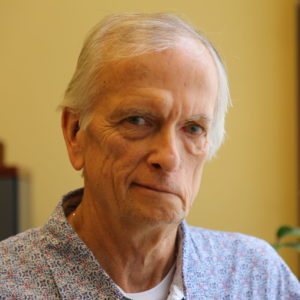
PhD, LEL, FCAE
Professor, Industrial Engineering
Email: mike.carter@utoronto.ca
Tel: 416-978-8661
Office: MC316
Research Group: Centre for Healthcare Engineering
Research Area
Operations Research
Research Interests
Healthcare human resource planning and forecasting; capacity planning; operating room planning and scheduling; wait list management; healthcare system modelling; patient flow simulation; cancer screening capacity; clinic planning.
Bio
Michael Carter is a Professor in the Department of Mechanical and Industrial Engineering at the University of Toronto (since 1981) and Founding Director of the Centre for Healthcare Engineering (in 2009). Since 1989, his research focus has been in the area of health care resource modeling. As of October 2021, Mike has supervised 28 Ph.D. students and 109 Masters and directed more than 313 undergraduate engineering students in over 139 projects with industry partners. Mike has over 150 former students working in healthcare in Toronto. He is cross appointed to the Institute of Health Policy, Management. He was the winner of the Annual Practice Prize from the Canadian Operational Research Society (CORS) four times (1988, 1992, 1996 and 2009). In 2000, he received the CORS Award of Merit for lifetime contributions to Canadian Operational Research. He is on the editorial board for the journals “Health Care Management Science”, “Operations Research for Health Care”, “Health Systems” and “IIE Transactions on Healthcare Systems”. He is an Adjunct Scientist with the Institute for Clinical Evaluative Sciences in Toronto and a member of the Faculty Advisory Council for the University of Toronto Chapter of the Institute for Healthcare Improvement (IHI). He is member of the Professional Engineers of Ontario. In 2012, he was inducted as a Fellow of the Canadian Academy of Engineering and in 2013, he was inducted as a Fellow of INFORMS, the international society for Operations Research and Management Science. In 2018, he became a Fellow of the Canadian Academy of Health Sciences. In 2019, he won the Northrup Frye Award for Teaching Excellence from the University of Toronto Alumni Association and in 2021, he was awarded the U of T “President’s Impact Award” for his contributions to improving healthcare in Canada.
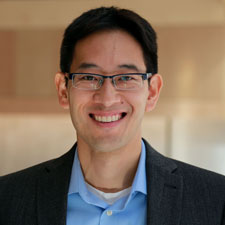
PhD, LEL
Professor, Industrial Engineering
Associate Director, Data Sciences Institute (DSI)
Director, Centre for Analytics and Artificial Intelligence Engineering (CARTE)
Email: tcy.chan@utoronto.ca
Tel: 416-946-5721
Office: MC315
Research Group: Applied Optimization Laboratory (AOL) ,
Centre for Research in Healthcare Engineering (CHE), Centre for Analytics and Artificial Intelligence Engineering (CARTE)
Research Areas
Operations Research
Applied Machine Learning
Research Interests
Operations research; optimization under uncertainty; mathematical programming; probabilistic analysis of systems; applications to radiation therapy; health care operations; sustainability; sports analytics.
Bio
Timothy Chan is the Associate Vice-President and Vice-Provost, Strategic Initiatives at the University of Toronto, a Professor in the department of Mechanical and Industrial Engineering, and a Senior Fellow of Massey College. He was previously Director of the Centre for Healthcare Engineering, Director of the Centre for Analytics and AI Engineering, and Associate Director, Research and Thematic Programming, of the Data Sciences Institute. His primary research interests are in operations research, optimization, and applied machine learning, with applications in healthcare, medicine, sustainability, and sports.
Professor Chan received his B.Sc. in Applied Mathematics from the University of British Columbia (2002), and his Ph.D. in Operations Research from the Massachusetts Institute of Technology (2007). Before coming to Toronto, he was an Associate in the Chicago office of McKinsey and Company (2007-2009), a global management consulting firm. During that time, he advised leading companies in the fields of medical device technology, travel and hospitality, telecommunications, and energy on issues of strategy, organization, technology and operations.
Professor Chan currently holds editorial roles in seven academic journals, including Operations Research, Management Science, and M&SOM. He has served in a variety of leadership and service roles at INFORMS and CORS, including as President of the INFORMS Health Application Society. He has over 120 publications in refereed journals, and is co-author of an upcoming book entitled “Introduction to Markov Decision Processes”. He has graduated over 50 graduate students and postdoctoral fellows, and takes great pride in cultivating a healthy, inclusive, and productive lab environment.
Professor Chan has received numerous awards and honours for his research, teaching and service. Recent highlights include the President’s Teaching Award from the University of Toronto in 2024, 1st place in the research paper competition at the MIT Sloan Sports Analytics Conference in 2024, the INFORMS Prize for Teaching OR/MS Practice in 2023, the Pierskalla Best Paper Award from INFORMS Health Applications Society in 2023, 1st place in the INFORMS Case Competition in 2022, and the CORS Eldon Gunn Service Award in 2022. His research has been featured by the CBC, CTV News, Global News, Reuters, CNN, the Globe and Mail, the Toronto Star, Boston Globe, ESPN, Canadian Business Magazine, and World Economic Forum.
 PhD, P.Eng., FAAAS, FCAE, FASME, FCSME
Tel: 416-978-5742
Office: BA8254
Research Group: Centre for Advanced Coating Technologies (CACT)
Research Area
Thermofluids
Research Interests
Heat transfer; fluid mechanics; thermal spray coating; spray painting; heat exchangers; heat pipes; impact of liquid drops; ink jet printing; waste heat recovery, electronic cooling.
Bio
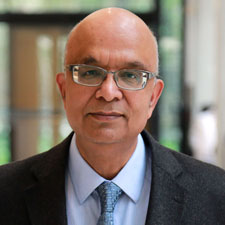
Sanjeev Chandra is a Professor in the Department of Mechanical and Industrial Engineering at the University of Toronto, which he joined in 1990. He received his B. Tech. from the Indian Institute of Technology, Kanpur (1981) his MS from Vanderbilt University (1983) and Ph.D. from Cornell University (1990). He has served as the Associate Chair (undergraduate studies), Associate Chair (graduate studies), Vice-Chair and Acting Chair of the MIE department, and Acting Vice-Dean (undergraduate studies) of the Faculty of Applied Science and Engineering.
Prof. Chandra is known internationally for his research on the dynamics of droplets and sprays and is one of the founders of the Centre for Advanced Coating Technologies at the University of Toronto. His research spans the areas of fluid mechanics, heat transfer and materials science and has also been applied in spray coating, spray cooling, spray painting, ink-jet printing, electronic cooling and waste heat recovery. Prof. Chandra has published over 200 papers in referred journals and international conference proceedings. He teaches courses in thermodynamics and heat transfer and has served as visiting professor at the University of Limoges (France), Korea University (S. Korea), the University of Bremen (Germany), the University of Darmstadt (Germany), Nanyang Technical University (Singapore) and the University of Brighton (UK). He has written an undergraduate textbook on thermodynamics and several chapters for books on the subjects of thermal spray coating, heat transfer and sprays. In 2010 he was awarded the The Brockhouse Canada Prize for Interdisciplinary Research, awarded by the Natural Sciences and Engineering Research Council of Canada to recognize outstanding collaborative research. In 2015 he was awarded the Jules Stachiewicz Medal by the Canadian Society for Mechanical Engineering for outstanding contributions to heat transfer. He is a Fellow of the Canadian Academy of Engineering, the American Society of Mechanical Engineers, the Canadian Society for Mechanical Engineering and the American Association for the Advancement of Science.
PhD
Assistant Professor, Industrial Engineering
Email: eldan.cohen@utoronto.ca
Tel: 416-978-4184
Office: BA8106
Research Group: Optimization and Machine Learning (OptiMaL)
Research Areas
Information Engineering
Applied Machine Learning
Research Interests
Machine and deep learning; heuristic search and optimization; data mining; applications in healthcare, automated planning, natural language processing, and software engineering.
Bio
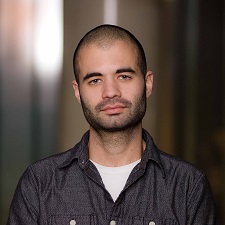
Eldan Cohen is an Assistant Professor of Industrial Engineering in the Department of Mechanical & Industrial Engineering. His research interests include machine and deep learning, heuristic search and optimization, and scalable data mining, with emphasis on interpretable and human-compatible approaches. In recent years, he worked on applications in healthcare, automated planning, natural language processing, and software engineering. Prior to joining MIE, he was a postdoctoral fellow in the Department of Computer Science at the University of Toronto and the Vector Institute for Artificial Intelligence. He obtained his Ph.D. in the Department of Mechanical & Industrial Engineering at the University of Toronto, working on heuristic search algorithms for automated planning and neural sequence decoding, and has worked as a research intern at the Fujitsu Laboratories of America, developing unsupervised machine learning algorithms for specialized optimization hardware.
PhD, P.Eng.
Associate Professor, Teaching Stream, Mechanical Engineering
Email: sinisa.colic@utoronto.ca
Tel: 416-978-5435
Office: MC314
Research Areas
Applied Machine Learning
Research Interests
Mechatronics; Automation; Applications of Deep Learning
Bio
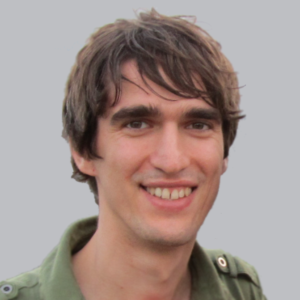
Dr. Colic is an Assistant Professor, Teaching Stream, in the Department of Mechanical and Industrial Engineering at the University of Toronto. His teaching portfolio spans courses in data science, deep learning, and mechatronics, with a strong emphasis on practical and interdisciplinary engineering applications. He earned his Ph.D. in Electrical and Computer Engineering from the University of Toronto, where his research focused on time-series analysis, signal processing, and machine learning for the development of data-driven treatment strategies in healthcare. Following his doctoral studies, Dr. Colic completed a postdoctoral fellowship at McMaster University, working with medical imaging data to support the diagnosis and treatment of mood disorders.
Dr. Colic received the Best Paper Award at the 35th Annual Conference of the IEEE Engineering in Medicine and Biology Society (EMBC) in Osaka, Japan, for his work on cross-frequency coupling as a tool to characterize seizure-like events. He has been an active contributor to innovation and entrepreneurship, Dr. Colic was part of the team that won the Digitech Innovation Prize in Paris, France, for developing an EEG-based system to manage major depressive disorder. He is a co-founder of With3D Inc., a consulting firm that has delivered services to both early-stage startups and established suppliers in the automotive and manufacturing industries.
With over a decade of involvement with the University of Toronto Engineering Outreach office, Dr. Colic has played a key role in designing and implementing experiential learning techniques in engineering education. He was the recipient of the MIE Early Career Teaching Award in recognition of his outstanding contributions to engineering education. His current academic and research interests are centered around three main areas:
(i) the development of hands-on, industry-informed learning experiences in engineering education, including the integration of Industry 4.0 technologies into the curriculum;
(ii) advisory roles on interdisciplinary projects at the intersection of deep learning, mechatronics, and robotics—such as preventative maintenance, anomaly detection, and digital twin systems;
(iii) promoting student engagement through engineering robotics clubs and competitions.
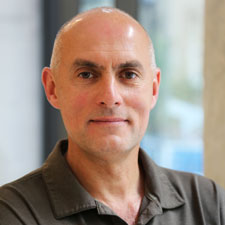
PhD, LEL
Associate Professor, Industrial Engineering
Email: mariano.consens@utoronto.ca
Tel: 416-946-8851
Office: BA8128
Research Areas
Information Engineering
Applied Machine Learning
Research Interests
Data management and the web; big data and analytics; blockchains, graph data management, linked data on the web; data visualization; information retrieval; data modelling; business process engineering; privacy and healthcare data management; autonomic systems
Bio
Mariano Consens received his PhD and MSc degrees in Computer Science from the University of Toronto. He also holds a Computer Systems Engineer degree from the Universidad de la Republica, Uruguay. Professor Consens has over 60 publications, including journal publications selected from best conference papers and several patents.
Professor Consens has been a faculty member in Information Engineering in the Department of Mechanical & Industrial Engineering, University of Toronto, since 2003. Before that, he was research faculty member at the School of Computer Science, University of Waterloo, from 1994 to 1999. In addition, he has been active in the software industry as a founder, director, and CTO of a couple of software start-ups. He was as a Visiting Scientist at Yahoo! Research during his sabbatical, and is currently a Visiting Scientist at the IBM Center for Advanced Studies in Toronto.