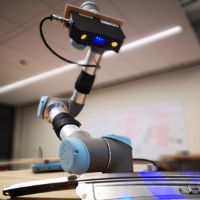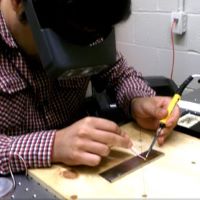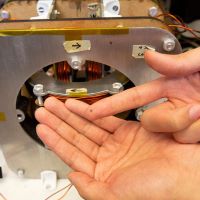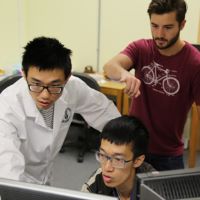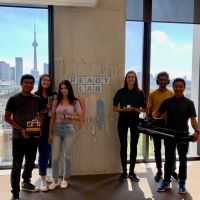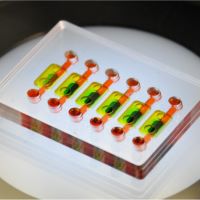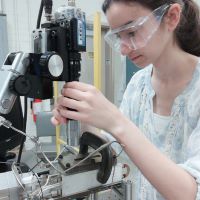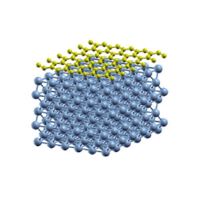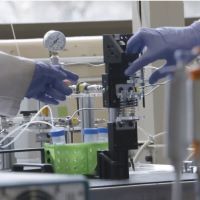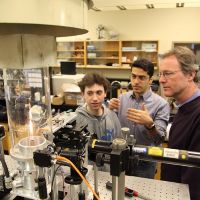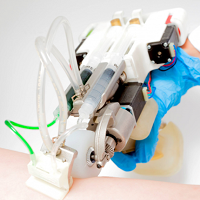
The actively pursued areas at AMNL are MEMS/NEMS (micro-nanoelectromechanical systems) design and fabrication (e.g., bioMEMS, sensors, actuators, and microfluidic devices); microrobotic and nanorobotic manipulation; and cellular biomechanics and mechanobiology. We develop enabling systems devices and techniques with which we tackle fundamental and applied biological/biomedical, clinical, and emerging engineering problems. Our research skills include micro/nano device design, fabrication, and testing; micro-nanorobotic manipulation; computer vision microscopy; pN-nN force sensing and control; automation at the micro and nano scales; cellular biomechanics; and electrical and mechanical characterization of biological cells and nanomaterials.
Director: Yu Sun, PhD, PEng
Lab website: http://amnl.mie.utoronto.ca/
Contact email:
Phone: (416) 978 8663
Fax: (416) 978 7753
Lab location: MC51C
The main goal of the research conducted in the Advanced Systems Laboratory is the development of complete feedback-based systems involving novel sensors, actuators, control and signal processing algorithms. Current research is driven by three application areas, namely:
- Retinal imaging adaptive optics systems.
- High-speed atomic force microscopy systems.
- Hard disk drive systems.
Contact email:
Phone: (416) 946 7967
Lab location: MB111
The Advanced Thermal/Fluids Optimization, Modelling and Simulation (ATOMS) Laboratory was founded in 2007 by Professor Cristina H. Amon. The lab is affiliated with the Department of Mechanical & Industrial Engineering and the Institute of Biomaterials & Biomedical Engineering at the University of Toronto.
ATOMS research methods involve numerical simulations of multi-scale systems using in-house and commercial codes. Our current research aims to advance the understanding of: (i) fluid transport phenomena in biological and energy applications, (ii) thermal transport phenomena in energy applications, and (iii) optimization of complex systems.
The lab is currently located on the third floor of the Rosebrugh Building at University of Toronto's St. George Campus.
Director: Cristina H. Amon, ScD, PEng, FAAAS, FASEE, FASME, FCAE, FCSME, FEIC, FIEEE, NAE
Lab website: http://www.mie.utoronto.ca/labs/atoms
Contact email:
Phone: (416) 946 8216
Fax: (416) 978 7753
Lab location: RS307
The Applied Optimization Lab (AOL) is comprised of an interdisciplinary group of researchers who develop advanced optimization techniques to solve complex problems primarily in health care and sustainability.
Lab website: http://chan.mie.utoronto.ca
Contact email:
Phone: (416) 978 4585
Fax: (416) 978 7753
Lab location: RS206
Thermodynamics of contact angles; Wetting and adhesion; generalization of the classical theory of capillarity to high curvature situations; Applications of Digitial Image Analysis and Processing to interfacial tension and other surface science problems; Modelling of cell and protein adhesion to synthetic and natural biomaterials; Applications of surface thermodynamics to biotechnological problems.
Director: A. Wilhelm Neumann, Dr.Rer.Nat.
Lab website: http://www.mie.utoronto.ca/labs/last/
Contact email:
Phone: (416) 978 1270
Fax: (416) 978 1270
Lab location: RM 502A/502B
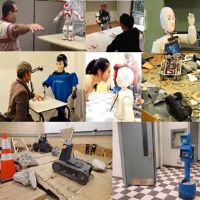
Autonomous Systems and Biomechatronics Laboratory focuses on developing intelligent mechatronics and robotic systems to assist humans in dangerous and stressful tasks and/or when a shortage of qualified personnel exists. In particular, our research is dedicated to the development of intelligent mechatronics systems with a primary focus on the design of robots and devices.
Director: Goldie Nejat, PhD
Lab website: http://asblab.mie.utoronto.ca/
Contact email:
Phone: (416) 978 0579
Fax: (416) 978 7753
Lab location: MC 202
At the Bio-instrument and Biomechanics Laboratory lab, we aim at developing bio-instruments for the advancement of biomedical research and applications. To facilitate the development of bio-instruments, we study mechanics property and behaviour of bio tissues and bio-materials. Our current research is focused on characterization of tissue viscoelastic properties and mechanical stimuli to tissue culturing in tissue engineering research.
Director: Jean Zu, PhD, PEng, FASME, FEIC, FCSME, FAAAS, FCAE
Lab website: http://www.mie.utoronto.ca/labs/cvdl/zu.html
Contact email:
Phone: (416) 946 3709
Fax: (416) 978 7753
Lab location: MC314F
At the Biomedical Simulation Laboratory (BSL), we strive to seamlessly integrate medical imaging and computer modeling to improve the detection, risk assessment, and treatment of cardiovascular diseases. Currently research is focused on the use of angiographic imaging and computational fluid dynamics (CFD) to identify hemodynamic and geometric "risk" factors for atherosclerosis and aneurysms; and the development of commercial and open-source medical imaging simulation environments.
Director: David A. Steinman, PhD, PEng, FASME
Lab website: http://www.mie.utoronto.ca/labs/bsl/
Contact email:
Phone: (416) 978 7773
Fax: (416) 978 7753
Lab location: MC336
The Biomimetics for Innovation and Design Laboratory (BIDLAB) at the University of Toronto focuses on developing systematic processes to identify relevant biological analogies for any given design problem. We approach this using natural-language techniques to search the vast amount of existing knowledge, rather than creating a database of biological knowledge specifically for design. Case studies and applications serve to validate and refine our methods.
Director: Lily H. Shu, PhD, PEng
Lab website: http://www.mie.utoronto.ca/labs/bidlab/
Contact email:
Phone: (416) 978 4605
Fax: (416) 978 7753
Lab location: MC 213/214
Biomechanics, tissue engineering, cellular mechanotransduction, bone modeling and remodeling, and bone regeneration. Currently, we are working on the anti-resorptive effect of mechanical loading on bone tissue; the advanced microfluidics system for bone cell mechanotransduction study; the role of focal adhesion assembly in cell mechanosensitivity using micropatterned surface; and development of advanced artificial bone matrix by employing novel microfabrication technologies.
Lab website: http://cbl.mie.utoronto.ca/
Contact email:
Phone: (416) 946 0943
Lab location: MB 308
The Cellular Mechanobiology Laboratory (CML) is an interdisciplinary group of talented researchers who apply principles of biomechanics, cell and molecular biology, and biomedical engineering to study mechanical regulation of cell and tissue function. Areas of interest and expertise include heart valve disease, stem cell mechanobiology, and biomedical microdevice design.
Director: Craig A Simmons, PhD, PEng
Phone: (416) 978 8660
Fax: (416) 978 7753
Lab location: MC 64 / RS421
The Centre for Advanced Coating Technologies (CACT) was established in 1998 as a collaborative effort by researchers from the departments of mechanical engineering and materials science, dedicated to both fundamental and applied research in the area of industrial coatings application. It is now in its ninth year of operation, with approximately 40 researchers, including professors from both departments, research staff members and graduate students. CACT conducts fundamental research, both analytical and experimental, in the area of thermal spray coating.
Director: Javad Mostaghimi, PhD, PEng, FAAAS, FASME, FCAE, FEIC
Lab website: http://www.mie.utoronto.ca/labs/cact/
Contact email:
Phone: (416) 946 8475
Fax: (416) 978 7753
Lab location: BA 8224/BA 8270
Director: Andreas Mandelis, PhD, PEO Ltd Eng Licensee, FRSC, FAPS, FSPIE
Lab website: http://cadift.mie.utoronto.ca/
Contact email:
Phone: (416) 978 1287
Fax: (416) 266 7867
Lab location: MC 51F
The Centre for Maintenance Optimization and Reliability Engineering is directed by Professor Andrew K. S. Jardine, the internationally recognized maintenance optimization expert. C-MORE´s research is driven by close interactions with industry, in particular with MORE consortium members and with researchers at universities world-wide. The focus is on real-world research in engineering asset management in the areas of condition-based maintenance, spares management, protective devices, maintenance and repair contracts, and failure-finding intervals.
Director: Andrew K.S. Jardine, PhD, PEng, CEng
Lab website: http://cmore.mie.utoronto.ca/
Contact email:
Phone: (416) 946 3939
Fax: (416) 978 7753
Lab location: BA8145
The Centre´s focus is the Canadian Financial Services Industry ("FSI"). This robust, world class, services industry is one of the fundamental strengths of the Canadian economic fabric. Members of this industry rely almost completely on the effective use of computers and communications systems in their core business activities. As other industries have in the past, the firm in the FSI has undergone substantial change during the 90´s and this will continue well into the next millennium.
Director: Joseph C. Paradi, PhD, PEng, FCAE, SSHRC/NSERC
Lab website: http://cmte.chem-eng.utoronto.ca/
Contact email:
Phone: (416) 978 6924
Fax: (416) 978 7753
Lab location: WB 259
The research group is primarily involved in the applications of Operational Research and Management Science in the improvement of Health Care delivery. Professor Carter has been working in the Health Care area for more than a decade, in such areas as Health Care modelling, scheduling operating rooms and determining the cause and relationship between overcrowding and waiting in different emergency departments.
Director: Michael W. Carter, PhD, PEO Ltd Eng Licensee
Lab website: http://www.mie.utoronto.ca/labs/health/
Contact email:
Phone: (416) 978 1178
Fax: (416) 978 7753
Lab location: RS 311
The Cognitive Engineering Laboratory (CEL) conducts applied research on how to introduce information technology into complex work environments to create an effective human-machine feedback control system..
Director: Greg A. Jamieson, PhD, PEng
Lab website: http://cel.mie.utoronto.ca/
Contact email:
Phone: (416) 978 0881
Fax: (416) 978 7753
Lab location: RS 315/317
The Combustion Research Laboratory seeks to improve our knowledge of combustion science and applications through experiments and numerical modeling. Research topics include biofuels, air pollution, detailed model development and optical sensors.
Director: Murray J. Thomson, PhD, PEng
Lab website: http://www.mie.utoronto.ca/labs/crl/
Contact email:
Phone: (416) 580 3391
Fax: (416) 978 7753
Lab location: MB 56
Computer Integrated Manufacturing (CIM) embodies three components essential to the implementation of flexible design & manufacturing -- the means for information storage, retrieval, manipulation and presentation; the mechanisms by which to sense state, and modify substance; and the methodologies by which to unite them. The Computer Integrated Manufacturing Laboratory (CIMLab), founded in 1987, provides students and research associates with necessary facilities to contribute to the success of this goal.
Lab website: http://www.mie.utoronto.ca/labs/ciml/
Contact email:
Phone: (416) 978 7786
Fax: (416) 978 7753
Lab location: MB 57
The Engine Research and Development Lab specializes in research on the combustion of alternative fuels, including biodiesel, bio-oil, and biogas, methanol, natural gas, propane and hydrogen in spark ignition and diesel engines. The focus of the work is on reducing engine exhaust emissions.
Director: James S. Wallace, PhD, PEng, FSAE, FCSME, FEIC
Contact email:
Phone: (416) 978 6721
Fax: (416) 978 7753
Lab location: MC 120G
Design of the engineering learning environment for accessibility and

inclusivity; Universal instructional design; Conceptualizing the learning environment as an information system.

Director: Susan McCahan, PhD, PEng
Contact email:
Phone: (416) 978-0490
Fax: (416) 978 7753
Lab location: BA1007
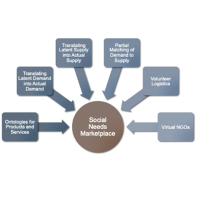
EIL research explores the creation of Enterprise Integration concepts in a bi-directional manner, in that it is simultaneously theory and application driven; an underlying philosophy to this research is that solving real problems leads to breakthrough research. Our basic research has explored topics such as: Ontologies for Enterprise Modelling, Agent Architectures and Coorindation and Constraint-Directed Scheduling, and applied them to problems such as Supply Chain Management, Knowledge-Based Design and Enterprise Engineering.
Director: Mark S. Fox, PhD, PEO Ltd Eng Licensee, FAAAI, FEIC
Lab website: http://www.eil.utoronto.ca/
Contact email:
Phone: (416) 978 8859
Fax: (416) 971 2479
Lab location: BA 8143
The ETC Lab conducts research related to navigation, manipulation and control in 3D environments. Some of our foci of research include the following:
• visual displays for telerobotic control
• human-machine interfaces for 3D mixed reality environments
• stereoscopic displays and augmented reality
• modelling of attentional workload
• human factors issues in medicine, in particular surgery and anaesthesiology
Director: Paul Milgram, PhD, PEng
Lab website: http://etclab.mie.utoronto.ca
Contact email:
Phone: (416) 978 3776
Fax: (416) 978 3662
Lab location: RS 313/314
Non-intrusive fluid velocity measurements are being carried out in areas where conventional methods are not feasible or are less convenient. Current applications include the flow of Newtonian liquids through porous media at low Reynolds numbers. Another area of application involves the flow of non-Newtonian elastic liquids. Results from these tests are aiding in the development of constitutive equations, or behavioral models, for the flow of these complex fluids.
Director: Iain G. Currie, PhD, PEng, FCSME
Lab website: http://www.mie.utoronto.ca/labs/fluids/
Contact email:
Phone: (416) 946 0343
Fax: (416) 978 7753
Lab location: MC 51D
The goal of all of the research work in FCMML is to enhance environmental sustainability by developing cleaner energy conversion technologies that reduce air pollution and greenhouse gas emissions compared to combustion-based power generation methods. Research projects are conceived with the goal of tackling the largest challenges preventing the widespread use of fuel cell technologies – cost, durability, and reliability. The ultimate objective of the work is to facilitate the widest and fastest possible adoption of cleaner energy conversion technologies in order to maximize their environmental benefit.
Director: Olivera Kesler, ScD, PEng
Lab website: http://www.mie.utoronto.ca/labs/sofc/
Contact email:
Phone: (416) 946 7581
Fax: (416) 978 7753
Lab location: HA 312
The Heat Transfer and Combustion Laboratory researches studies pehnomena relevant to the energy and materials processing industries. Research topics include spray deposition, spray coating, droplet generation, rapid prototyping by droplet deposition and spray forming of foam heat exchangers.
Director: Sanjeev Chandra, PhD, PEng, FAAAS, FASME
Contact email:
Phone: (416) 978 1822
Fax: (416) 978 7753
Lab location: MB 65/66
In HFASt, we conduct research on understanding and improving human behaviour and performance in multi-task and complex situations, using a wide range of analytical techniques. The application areas include surface transportation, healthcare, mining, unmanned vehicle supervisory control.
Director: Birsen Donmez, PhD
Lab website: http://hfast.mie.utoronto.ca/
Contact email:
Phone: 416-978-0881
Fax: 416-978-7753
Lab location: RS 317
imLEG was formed to promote integration of manufacturing and logistics studies. Major areas of interest is to perform applied research in various logistics problems that involves manufacturing, inventory control and transportation.
Director: Chi-Guhn Lee, PhD, PEng
Lab website: http://www.mie.utoronto.ca/labs/ilr/imLEG/
Contact email:
Phone: (416) 946 0052
Fax: (416) 978 3453
Lab location: RS 308
The Interactive Media Lab (IML) is part of the Human Factors / Ergonomics area of the Department of Mechanical and Industrial Engineering at the University of Toronto. In addition, we collaborate closely with KMDI (Knowledge Media Design Institute). The lab carries out research on the improvement of user interfaces for information systems. This research includes the design and testing of innovative multimedia environments and usability testing of existing interfaces and systems.
Director: Mark H. Chignell, PhD
Lab website: http://imedia.mie.utoronto.ca
Contact email:
Phone: (416) 978 7581
Fax: (416) 978 7753
Lab location: BA 8171
Robotics; Fuzzy-Neural Integration; Fuzzy Clustering
; Reinforcement Learning; Supervised and Unsupervised Learning; Fuzzy Data Mining

Director: Burhan I. Turksen, Ph.D. P.Eng.
Lab website: http://www.mie.utoronto.ca/labs/kis/
Contact email:
Phone: (416) 978 1278
Fax: (416) 978 7753
Lab location: HA 301
Director: Beno Benhabib, PhD, PEng
Contact email:
Phone: (416) 978 7786
Fax: (416) 978 7753
Lab location: MB 61
The MADL offers you an exciting opportunity to work in cutting edge research that is both challenging and stimulating. We are unique in the sense that we combine highly sophisticated modelling and simulation techniques to real industrial problems and our work is essential to engineering practice.


This is probably the only lab in North America that combines the use of advanced materials and mechanics in the design of mechanical systems. We have first class researchers that employ nanomechanics, FEM, failure analysis, damage mechanics and experimental mechanics (including NDE) in advanced system design in the transport, electronic packaging and oil and gas industries.
Director: Shaker A. Meguid, PhD, PEng, CEng, FIMechE, FASME, FEIC
Lab website: http://www.mie.utoronto.ca/labs/madl
Contact email:
Phone: (416) 978 6853
Fax: (416) 978 7753
Lab location: MC 203
Through experiments and modeling, our research develops techniques for engineers to predict the strength and durability of materials such as adhesives and solder. Similar approaches are used to create models that can be used to understand and optimize manufacturing processes. Recent examples include vibratory finishing and abrasive jet micro-machining.
Director: Jan K. Spelt, PhD, PEng, FCSME
Lab website: http://www.mie.utoronto.ca/labs/mpm/
Contact email:
Phone: (416) 978 1823
Fax: (416) 978 7753
Lab location: MB 69/75/76
The main areas of research are Mechatronics design, precision positioning, Microfluidics and Micro Electro Mechanical Systems (MEMS) with a special focus on design of linear motors and precision positioners, design of microactuators, micropumps, microvalves, mixing chambers and integrated microfluidic systems, MEMS design and fabrication, and instrumentation and signal processing. Application areas include photonics, biomedical devices, instrumentations, genomics and proteomics, positioning in space applications, adaptive optics, automotive systems and electronic switches.
Director: Ridha Ben Mrad, PhD, PEng, FCSME
Lab website: http://www.mie.utoronto.ca/labs/mmdl/
Contact email:
Phone: (416) 978 6035
Fax: (416) 978 7753
Lab location: HA 304
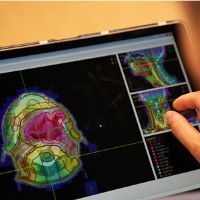
The Medical Operations Research Laboratory (morLAB) is a group of academicians at the University of Toronto dedicated to improving the quality of medical procedures using operations research techniques. Research topics include mathematical modeling of radiotherapy treatment design and pandemic disease spread.
Director: Dionne M. Aleman, PhD, PEng
Lab website: http://morlab.mie.utoronto.ca
Contact email:
Phone: (416) 978 8600
Fax: (416) 978 7753
Lab location: RS304
The Microcellular Plastics Manufacturing Laboratory (MPML) is the premier research laboratory for innovative plastic foaming technology in the Department of Mechanical and Industrial Engineering, University of Toronto. The key research areas include the processing of plastic foams through novel injection molding, extrusion, and bead molding techniques.
Director: Chul B. Park, PhD, PEng, FRSC, FAAAS, FASME, FCAE, FCSME, FEIC, FSPE
Lab website: http://mpml.mie.utoronto.ca/lab/
Contact email:
Phone: (416) 978 0947
Fax: (416) 978 7753
Lab location: RS108/118 RS112
We investigate and utilize dynamically changing flow situations at small scales to either study complex chemical or biological phenomena or organize matter in space and time. We use a combination of micro/nanofabrication approaches, analytical and numerical models and imaging modalities. By engineering simple microenvironments we are able to probe and abstract out a general principle behind an observed phenomenon. We aim at translating these principles to massively scaled, easy-to-use, well-integrated and fully automated fluidic microprocessors.
Director: Axel Guenther, PhD
Lab website: http://mfl.mie.utoronto.ca/
Contact email:
Phone: (416) 978 3050
Fax: (416) 978 7753
Lab location: MB 51
Our research interests encompass the study of microfluidics applied to transport phenomena in energy systems, with a focus on polymer electrolyte membrane (PEM) fuel cell technologies. The goal of our work is to design novel materials and architectures for enhanced energy systems through a two pronged approach: numerical modelling and experimental validation. Our research is multidisciplinary and involves fluid dynamics, thermodynamics, micro- and nano-technologies, chemistry, and geology.
Director: Aimy Bazylak, PhD, PEng
Lab website: http://bazylak.mie.utoronto.ca/
Contact email:
Phone: (416) 978 1274
Fax: (416) 978 7753
Lab location: MB 60/63
The Lab for Modeling Materials Processes at the University of Toronto develops and applies numerical models for flow, heat transfer, and phase change, to analyze various materials processes, often in collaboration with other researchers. Applications include spray coating, melting and dissolution processes, wetting and dewetting phenomena, and the control of boiler fouling.
Contact email:
Phone: (416) 978 5739
Fax: (416) 978 7753
Lab location: MC 68/69
Multiphase Flow and Spray Systems Laboratory at the University of Toronto is involved in a wide range of experimental and computational research in the following areas: Atomization and Sprays; Computational Fluid Dynamics; Microfluidics; Biotechnology; Energy, Combustion and Environment; Nanotechnology; Bubbles; Ferrofluids.
Director: Nasser Ashgriz, PhD, JD, PEng, FAAAS
Lab website: http://mussl.mie.utoronto.ca/
Contact email:
Phone: (416) 946 3408
Fax: (416) 978 7753
Lab location: MC 302
The main thrust of research and development work in the Laboratory For Nonlinear Systems Control is in the area of robotics, automation and control. Other work in the area of control of systems such as internal combustion engines is ongoing. Design of hardware to permit testing of concepts and processes is central to the work done. Though close work with key industries in Canada, real world automation problems have been identified which simultaneously provide rich research problem areas and important vehicles for technology transfer to industry.
Director: James K. Mills, PhD, PEng
Lab website: http://www.mie.utoronto.ca/labs/nonlin/
Contact email:
Phone: (416) 978 0640
Fax: (416) 978 7753
Lab location: RS 203
The OCE Connections Facility is devoted to students involved in the OCE Connections Program. First established at the University of Toronto in 1991, the Program promotes the development of new technologies or the solving of real-world technical problems, through linkages between engineering students and Ontario industries. Since its inception, over 220 Mechanical Engineers have participated in the Program.
Director: William L. Cleghorn, PhD, PEng
Lab website: http://www.mie.utoronto.ca/faculty/cleghorn/projects/Connections/
Contact email:
Phone: (416) 978 5081
Fax: (416) 978 7753
Lab location: MB 124
The University of Toronto is honored to have been selected as one of approximately 50 PACE institutions worldwide.
PACE links GM, Autodesk, EDS, Hewlett Packard, Siemens UGS PLM Software, Sun Microsystems, and their global operations, to support strategically selected academic institutions worldwide to develop the automotive product lifecycle management (PLM) team of the future. PACE generously provides computer software and hardware to support instruction in the areas of 3-D Solid Modeling, 3-D Plant Layout, CAE/Simulation, CAM, PDM - Product Data Management, Digital Collaboration, and Digital Styling.
The PACE Design Studio serves our students involved who are participating in several PACE activities, such as completing PACE course design projects and undergraduate theses, collaborating with hundreds of other engineering students worldwide on the design and manufacture of PACE Global Vehicles, and completing PACE-sponsored international design courses.
Director: William L. Cleghorn, PhD, PEng
Lab website: http://www.mie.utoronto.ca/faculty/cleghorn/projects/PACE/PACE.html
The research in this laboratory is driven by practical problems such as the development of optimal policies for condition-based maintenance (CBM), the optimal multivariate quality control for both short and long production runs, and the development of optimal sampling schemes for monitoring partially observable stochastic processes.
Challenging theoretical problems include the analysis of structural properties of optimal control policies in the partially observable process framework as well as estimation and process modeling which includes the development of off-line and on-line model parameter estimation procedures and optimal filtering.
The practical applications include the development of fault detection schemes and diagnostic methods for on-line implementation in real CBM systems.
The top-notch research unique in the world has produced results published in the top international journals such as Operations Research, Mathematics of Operations Research, Journal of Applied Probability, Advances in Applied Probability, European Journal of OR and Naval Research Logistics. The recently published optimality results for multivariate quality and process control are the only such results published in the world.
Number of inventions have been developed which have been registered as IP Disclosures with UofT Research Council. Based on the research results and inventions obtained, a user-friendly software is currently under development with the sponsoring Canadian maintenance software development company Cetaris which will be implemented as a unique module in their CBM support software distributed worldwide, with majority of large client companies in the United States and Canada.
Director: Viliam Makis, PhD, FISEAM, Dipl Ing, PEO Ltd Eng Licensee
Contact email:
Phone: (416) 978 4631
Fax: (416) 978 7753
Lab location: MC314E
The laboratory is fully equipped to measure the flow properties of liquids, particularly complex liquids such as ketchup, molten plastic, eye drops, paint, and mineral slurries, to name some recent examples. The primary instruments are two state-of-the-art commercial rheometers for characterization in shear, and a filament-stretching rheometer for characterization in extension, one of only six such instruments in the world.
Lab website: http://www.mie.utoronto.ca/labs/rheology/
Contact email:
Phone: (416) 978 3049
Fax: (416) 978 7753
Lab location: MC 51G
The Robotics and Automation Laboratory (RAL) and Mechatronics Laboratory (ML) were established in 1982 and 1995, respectively. They have a common mandate:
(i) To conduct fundamental and applied research in the science of robotics (semi & fully automated and remote controlled systems) and mechatronics (integration of intelligent & autonomous systems;
(ii) To educate at undergraduate and graduate levels in the field of robotics and mechatronics;
(iii) To conduct industrial research and development under contract;
(iv) To spin off technologies to the commercial market.
Director: Andrew A. Goldenberg, PhD, PEng, FAAAS, FIEEE, FASME, FEIC, FCAE
Lab website: http://www.mie.utoronto.ca/labs/ral/
Contact email:
Phone: (416) 978 5745
Fax: (416) 978 7753
Lab location: MB 110
The mission of the Lab is theoretical and empirical research in the application of automated reasoning techniques to computationally challenging problems that arise from semantic interoperability, including ontologies, automated reasoning, and semantic web services.
Director: Michael Gruninger, PhD
Lab website: http://stl.mie.utoronto.ca/
Contact email:
Phone: (416) 946 3216
Fax: (416) 978 7753
Lab location: BA 8120
Director: David Sinton, PhD, PEng
Lab website: http://www.mie.utoronto.ca/labs/SintonLab/
Phone:
Fax:
Smart and Adaptive polymers are emerging class of materials that possess unique properties, including the ability to sense and respond to different stimuli, such as electrical, mechanical, chemical, and biological, in a prescribed fashion. Examples of these polymers include biopolymers, active polymers, and polymer composites. These synthetic polymers have proven themselves in challenging environments and can be used in a variety of applications including tissue engineering, light-weight materials, biologically inspired materials, materials for biomedical devices, sensors and actuators, electronics packaging, and automotive materials. Our research interests include the fabrication of high-performance functional polymers, characterization of polymer properties (mechanical, viscoelastic, thermal, electric, etc.), correlation of morphological variations with polymer properties, and analytical modeling and numerical simulation of polymer properties.
Director: Hani Naguib, PhD, PEng, CEng, FIMMM, FCSME
Lab website: http://sapl.mie.utoronto.ca/
Contact email:
Phone: (416) 978 4657
Fax: (416) 978 7753
Lab location: MB 217/218
The TKL is a Research Unit within the Mechanical and Industrial Engineering Department at the University of Toronto
Director: Charles A. Ward, PhD
Lab website: http://www.mie.utoronto.ca/labs/tkl/
Contact email:
Phone: (416) 978 5107
Fax: (416) 978 7753
Lab location: MC 303/304
The Toronto Intelligent Decision Engineering Laboratory is concerned with the structure, organization, and manipulation of information for automated and human decision making. Our primary research focus is the extension of AI and optimization techniques to this end. As a result we are interested in such techniques as constraint programming, local search, hybrid AI/OR techniques, reasoning with uncertainty and in dynamic environments, machine learning, data mining, and representation and reasoning about preferences.
Director: J. Christopher Beck, PhD, PEO Ltd Eng Licensee
Lab website: http://tidel.mie.utoronto.ca/
Contact email:
Phone: (416) 946 0110
Fax: (416) 978 7753
Lab location: BA 8140
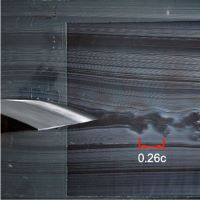
Experimental investigations are performed in a low-turbulence recirculating wind tunnel. The 5-m-long test section of this tunnel has a spanwise extent of 0.91 m and a height of 1.22 m (Fig. 1). The work has resulted in new insight into flow control for aerodynamically low Reynolds number flows and wind turbine applications. Other work has improved energy efficiency in the pulp and paper industry.
Director: Pierre E. Sullivan, PhD, PEng
Contact email:
Phone: (416) 978 6444
Fax: (416) 978 7753
Lab location: RS 105
The Ultrasonic Nondestructive Evaluation Laboratory (UNDEL) is focused on experimental and numerical research for the engineering applications of ultrasound. The goal of the Ultrasonic Nondestructive Evaluation Laboratory is to develop ultrasonic equipment and techniques for nondestructively evaluating materials and engineered structures or components. In addition, methods are being explored for using high-amplitude ultrasound for tasks such as fluid pumping and mixing, high-cycle fatigue, and plastic welding.
Director: Anthony N. Sinclair, PhD, PEng, FCSME
Lab website: http://www.mie.utoronto.ca/labs/undel/
Contact email:
Phone: (416) 978 1271
Fax: (416) 978 7753
Lab location: MC 207
The objectives of the Vibration and Computational Dynamics Laboratory are (1) to conduct high level research in the field of mechanical vibration and dynamics via analytical, numerical or experimental approaches; (2) to closely collaborate with industry to serve the industrial needs; and (3) to develop commercial software for industry in its design and analysis work.
Director: Jean Zu, PhD, PEng, FASME, FEIC, FCSME, FAAAS, FCAE
Lab website: http://www.mie.utoronto.ca/labs/cvdl/zu.html
Contact email:
Phone: (416) 978 0961
Fax: (416) 978 7553
Lab location: MC314F
The research and development in this laboratory focuses on the development of effective fault detection and diagnostic schemes based on analysis and modeling of vibration data for CBM purposes.
The laboratory is equipped with a diagnostic test rig containing a model of a planetary gearbox for vibration data collection and testing of the developed fault detection and diagnostic schemes for rotating mechanical equipment, mainly gearboxes.
Fault detection and diagnostic schemes utilizing vibration data collected on-line have been published in the top journals, several IP Disclosures have been registered, and the longer-term objective is the development of a unique CBM software module for fault detection and diagnosis based on vibration data to be implemented in real CBM systems. The research has been sponsored by Syncrude Canada, Imperial Oil, and NSERC.
Director: Viliam Makis, PhD, FISEAM, Dipl Ing, PEO Ltd Eng Licensee
Contact email:
Phone: (416) 978 4218
Fax: (416) 978 7753
Lab location: MC215A